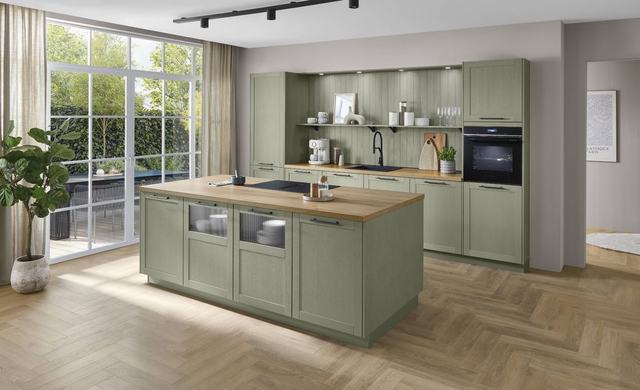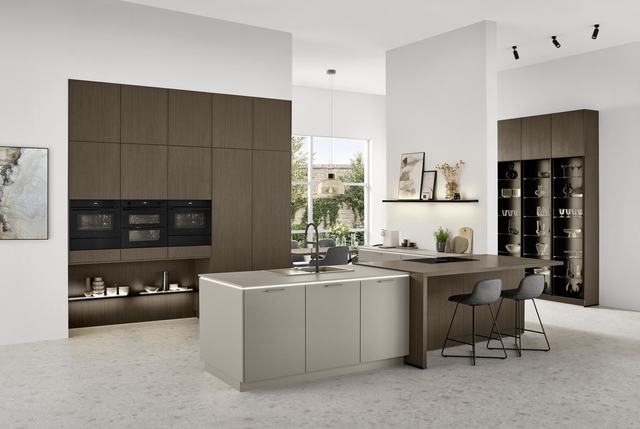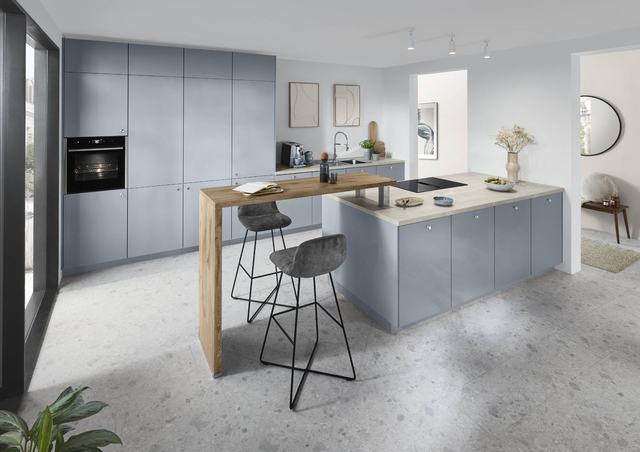
German factory, local hands.
The furniture comes out of a German kitchen factory, with its standards and its testing. The project, the building work and the fitting are ours, in your town and with our own team. Here is what each half means, in concrete terms.
You buy a kitchen twice.
First you buy furniture, which is an industrial product made a long way away. Then you buy someone to measure it, draw it, deliver it, knock down whatever needs knocking down and leave it level on your wall. Almost everything that goes wrong with a kitchen goes wrong in the second half, and it is the half nobody talks about in the window.
| The German half | The local half |
|---|---|
| The carcase, the edging and the back set into a groove | Measuring your kitchen with a tape, not off the floor plan |
| The hardware, with its opening cycles tested | Drawing it with you on screen, in an hour, in front of you |
| The emission and steam-resistance standards | The partition, the floor, the tiling, the plumbing and the electrics |
| Repeatability: today’s unit still fits the one you order in ten years | The fitting, by our own team and not by whichever fitter was free |
| The manufacturer’s warranty on the furniture | Who picks up the phone when something fails |
Anyone can buy the left-hand column: it is a catalogue. The right-hand one is what tells one showroom from another, and it is what the rest of this page is about.
A kitchen is the carcass, not the door.
What you see of a kitchen is the fronts, and those are the easy part to copy: the same matt lacquer comes out of any factory. What holds it up for twenty years is the part you don't see.
In German manufacturing the carcass is high-density board, edged on all four sides, with the back seated in a groove rather than stapled on from outside. That is what stops a wall unit pulling away under load, or the sink base swelling the day a seal drips without you noticing.
The thicknesses and the resistance to steam are also why it weighs a good deal more than a mid-range kitchen. You notice it loading the van and you notice it hanging the units.
The standards it has to pass.
The German kitchen-furniture industry works to testing standards that put a number on what the rest of the market leaves as adjectives. They are not decorative badges: they are laboratory tests with measured cycles, loads and humidity.
DIN 68930
The German standard for kitchen furniture. It measures whether the unit does the job it is sold for, not how it looks in a photograph. Its 2025 revision tightens precisely the two tests that finish a kitchen off: swings in climate and water vapour.
15 years
The minimum service life the materials and components are tested against before they go into a cabinet. It is not how long the kitchen lasts: it is the bar a part has to clear to be used at all.
EN 15338
The European standard for pull-out units. It puts runners and drawers through thousands of loaded opening cycles, and that is exactly where a cheap kitchen gives out.
The M mark
The German furniture quality mark, the «golden M». It is awarded for safety, durability, emissions and environmental performance, and it is audited by an independent body.
The units are made in Germany and go through everyday-use testing in the factory's own laboratory, on top of regular checks by independent institutes. The board meets the formaldehyde emission class required for indoor furniture. The exact figures for each range are in its technical data sheet, which you can ask for in the showroom.
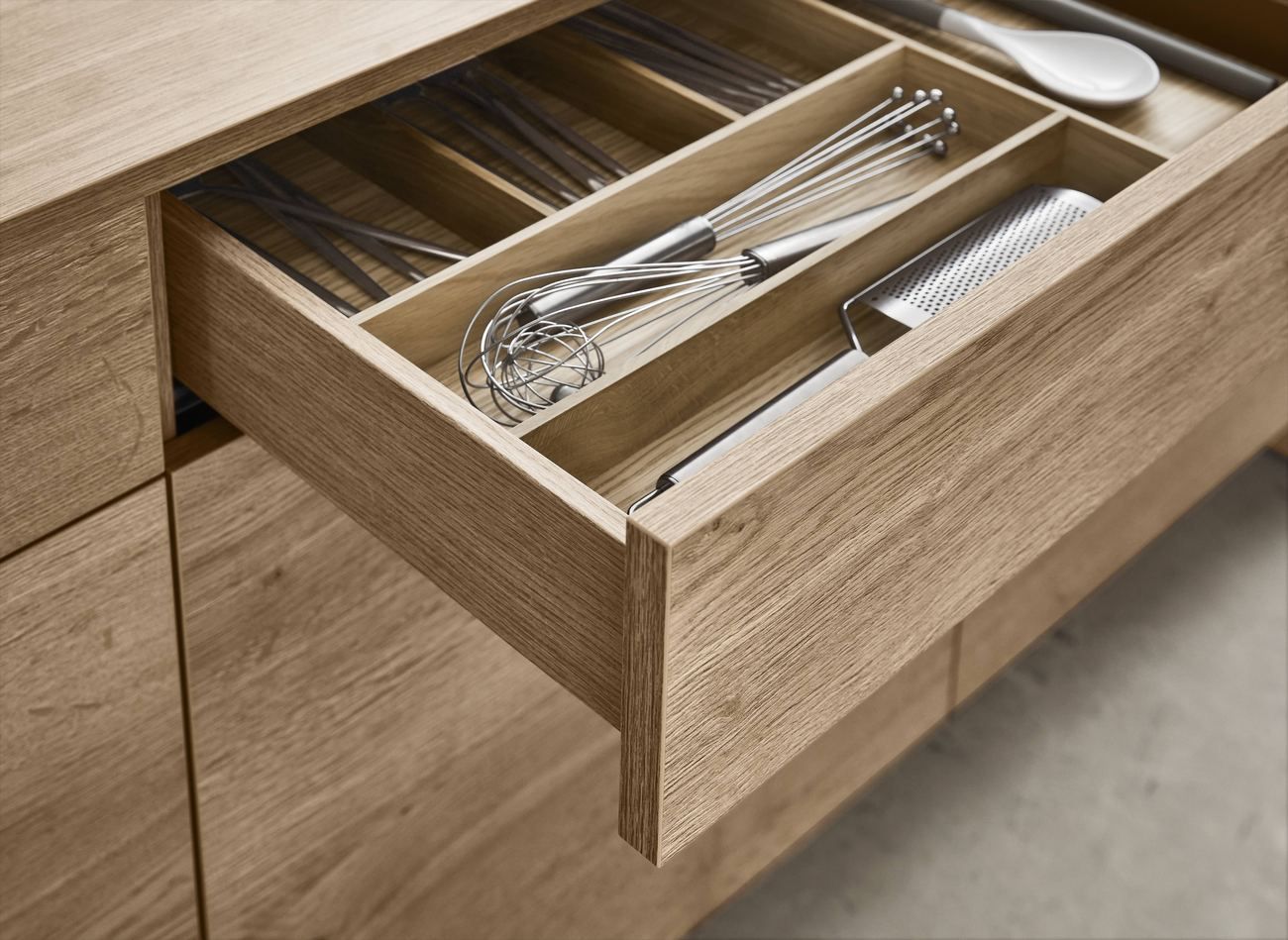
The hardware is half the price and all of the difference.
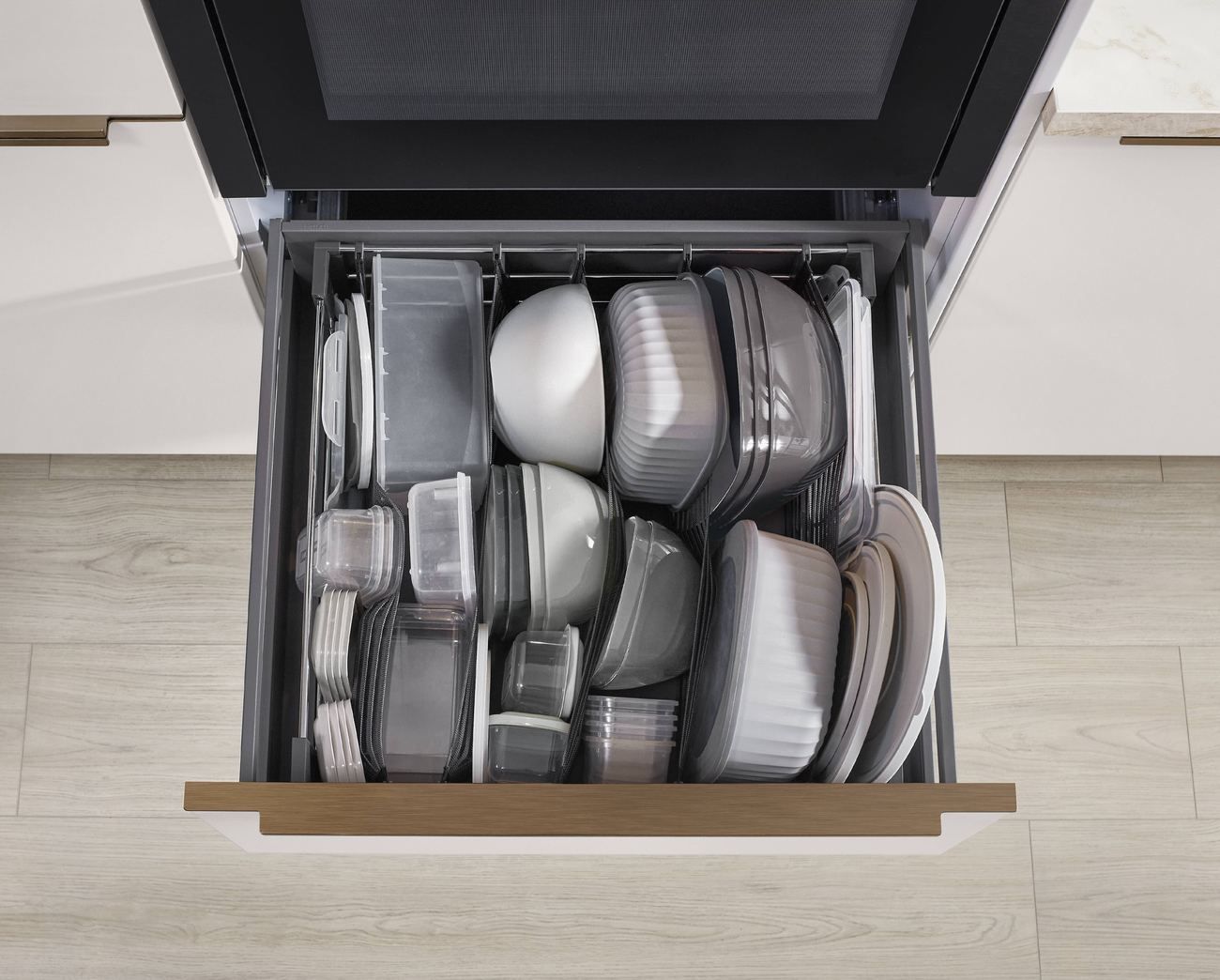
A drawer is not a box: it is a runner, a damping mechanism, three-way adjustment and a soft close. It is the part you use forty times a day and the first thing to fail in a cheap kitchen.
In German manufacturing the full-extension soft-close drawer is standard, and so is the soft-close hinge. It doesn't show up as a separate line on the quote because it isn't an add-on.
When you compare two quotes, check whether the other one includes the same things. A lower price with side-mounted runners and hinges without soft close is not the same kitchen cheaper: it is a different kitchen.
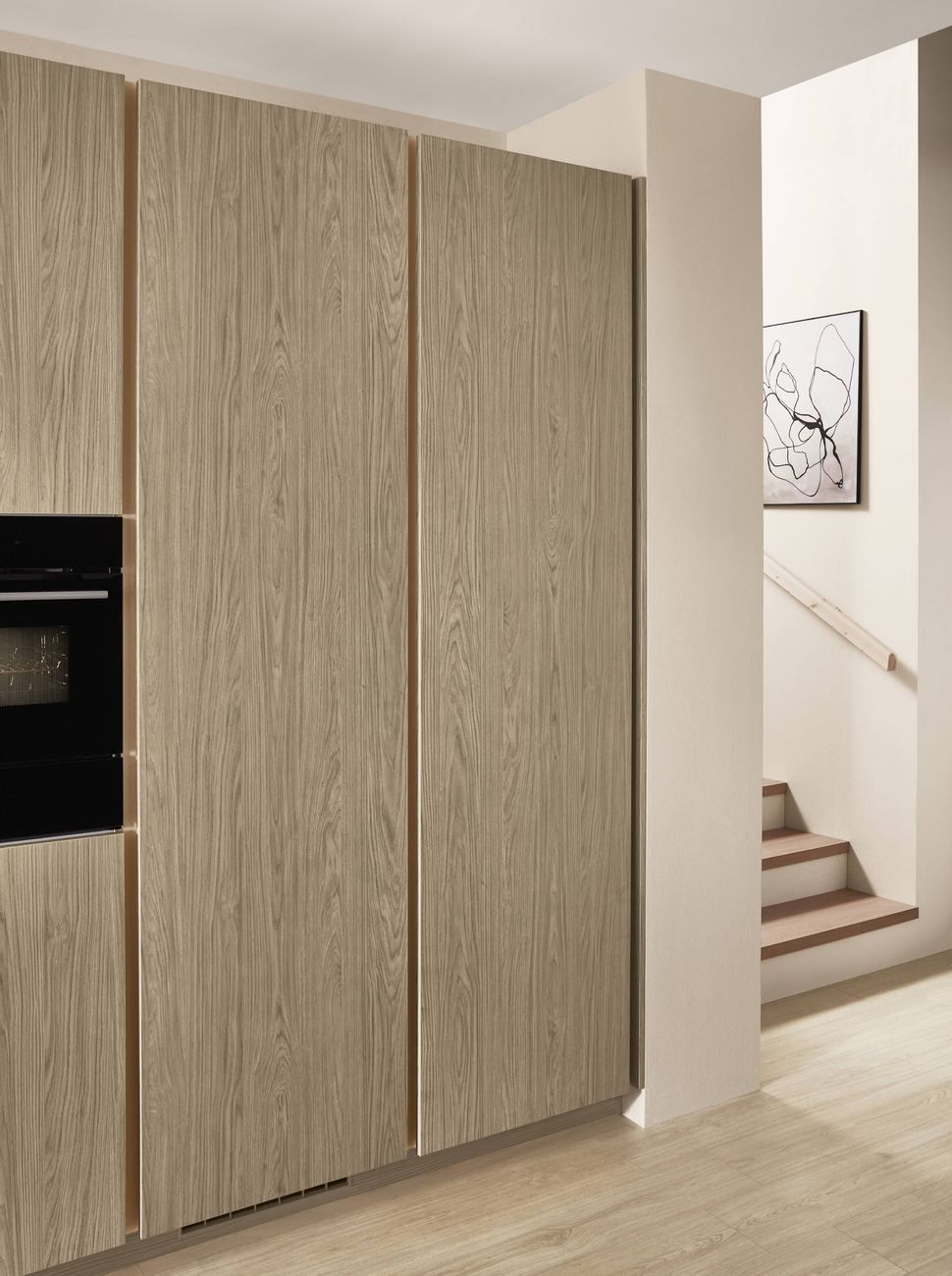
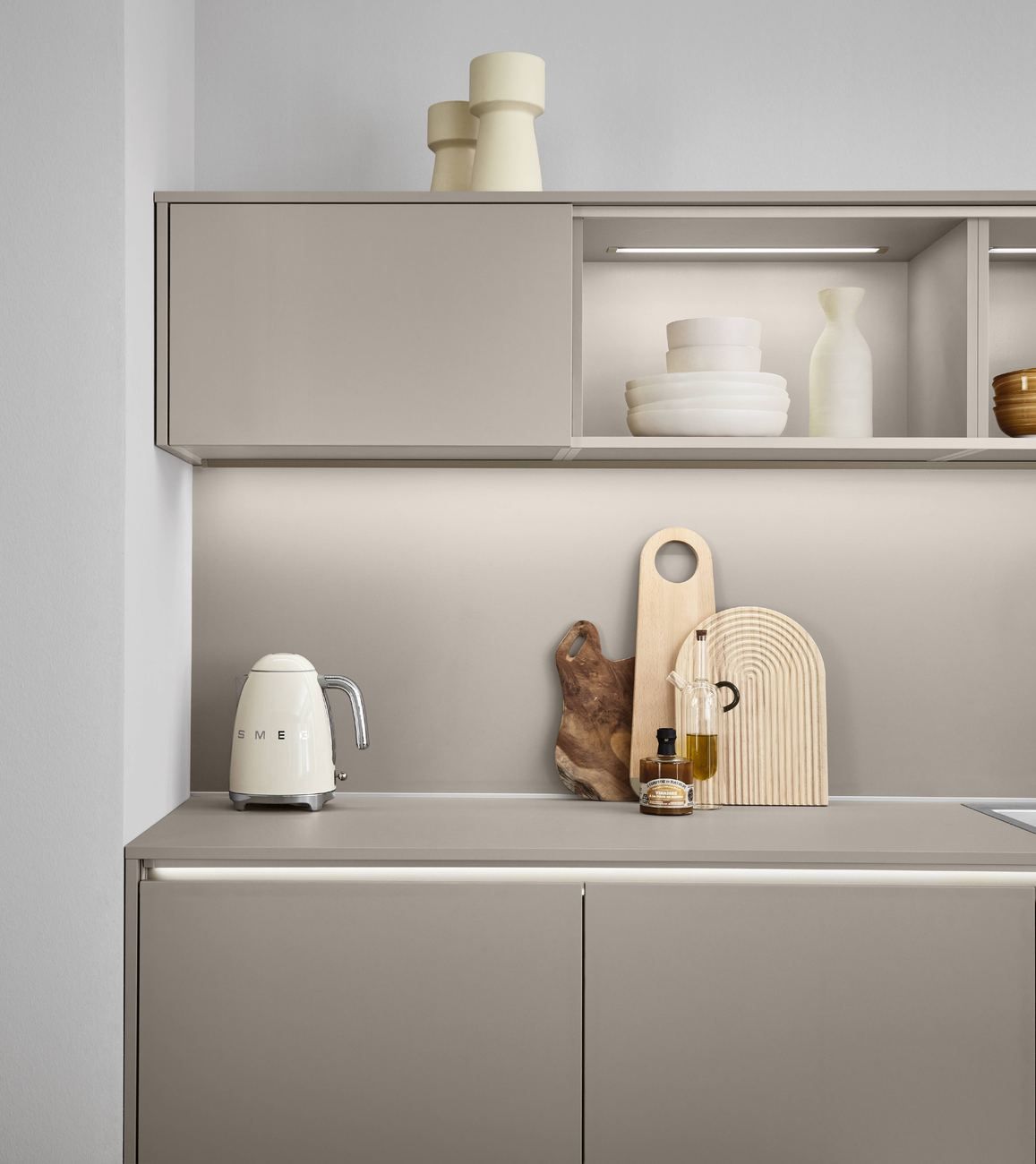
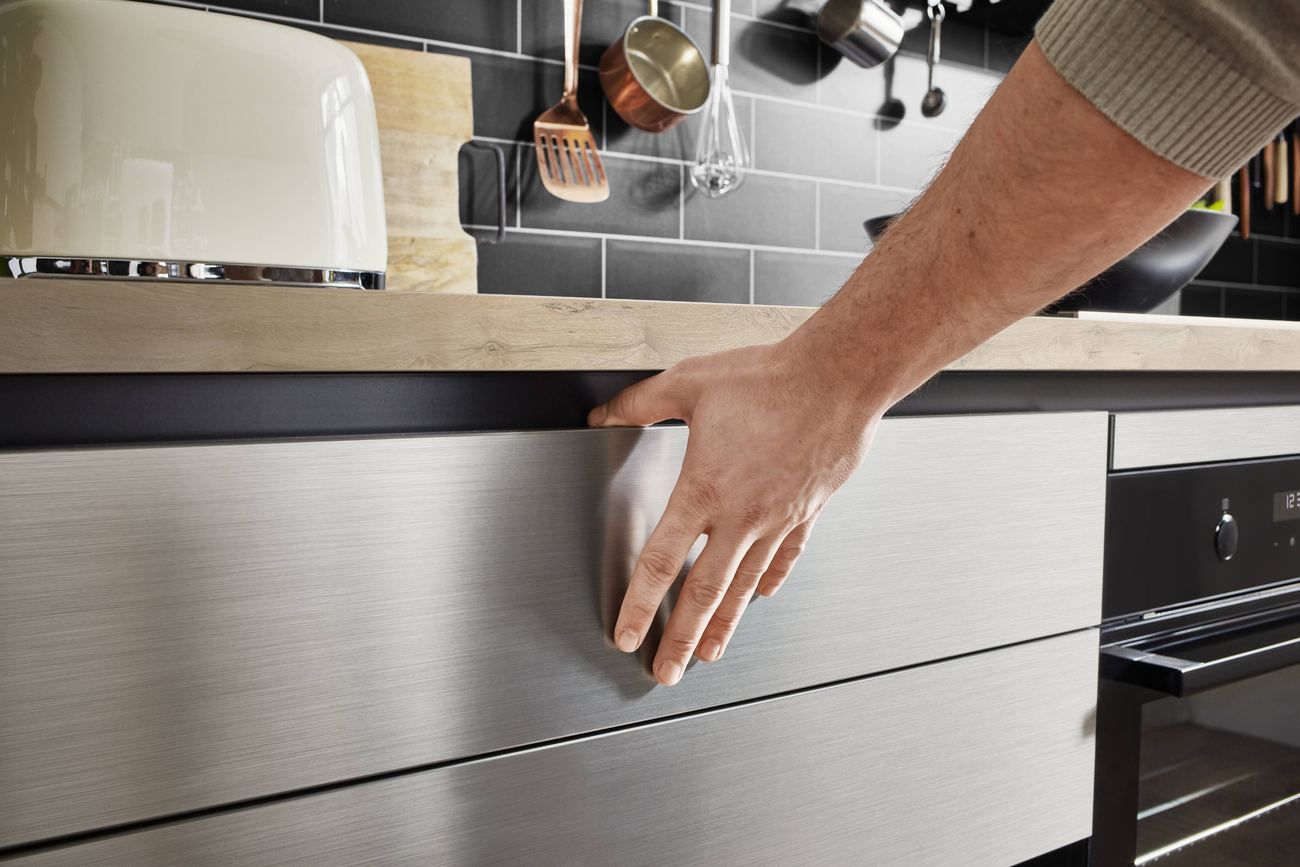
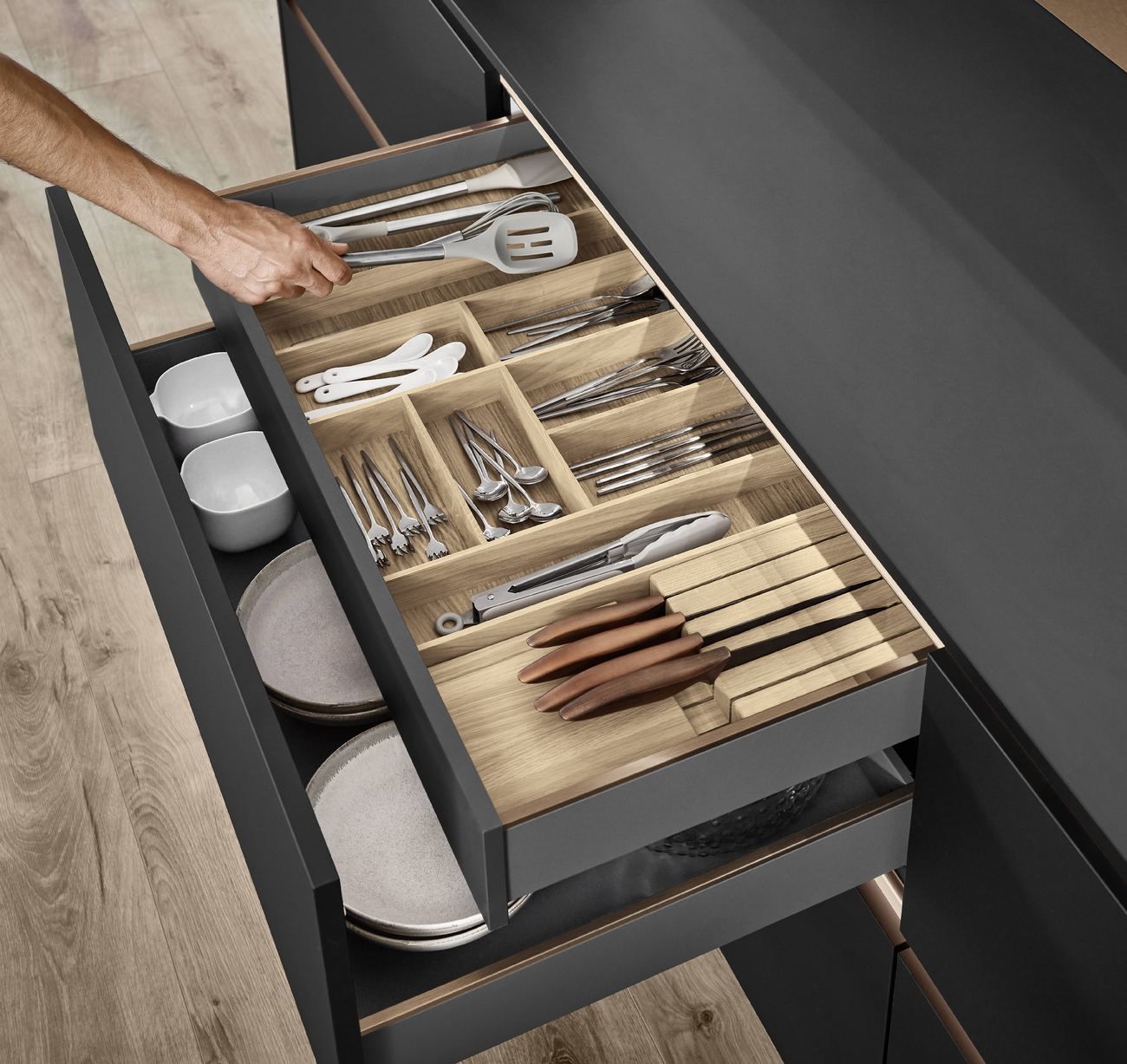
The parts you don't see, up close.
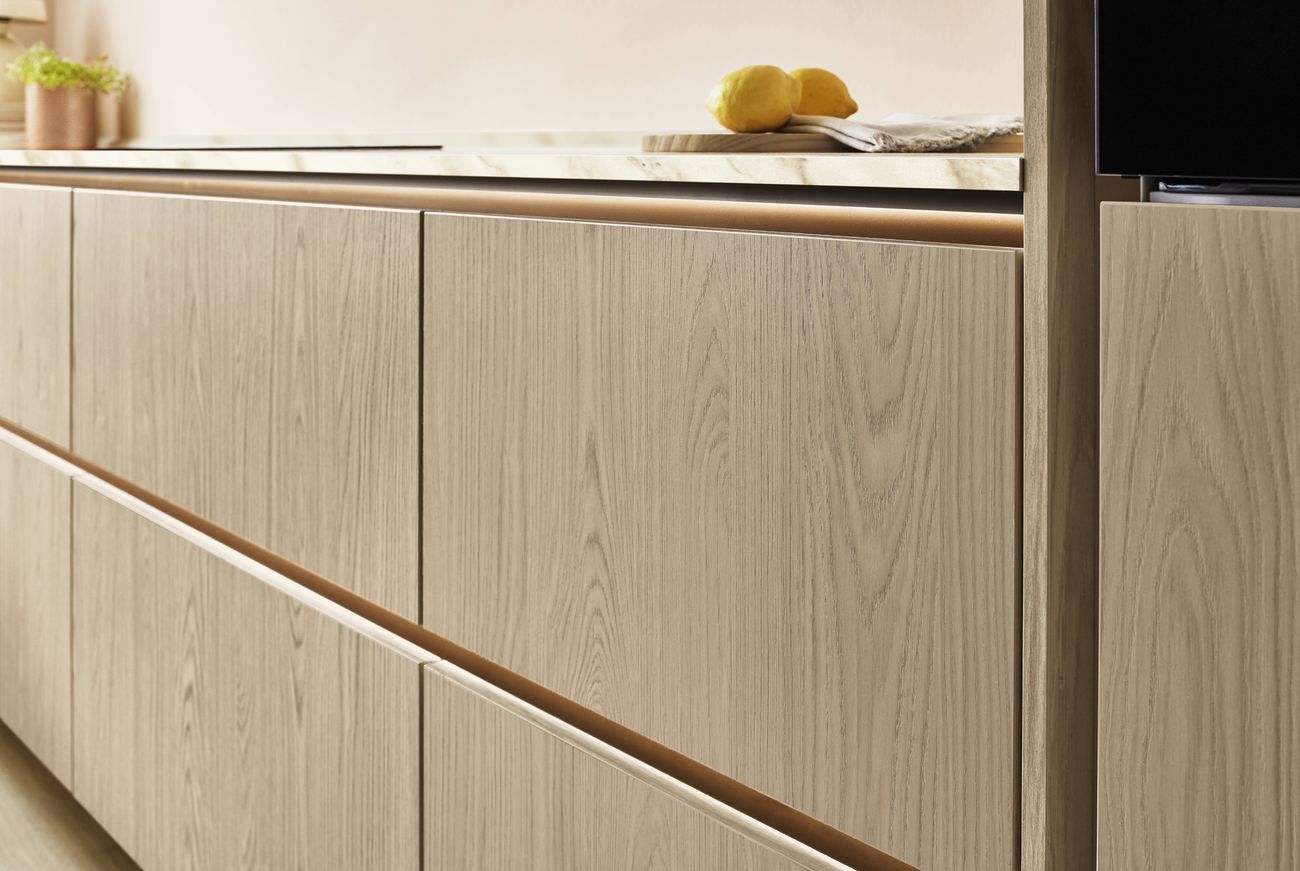
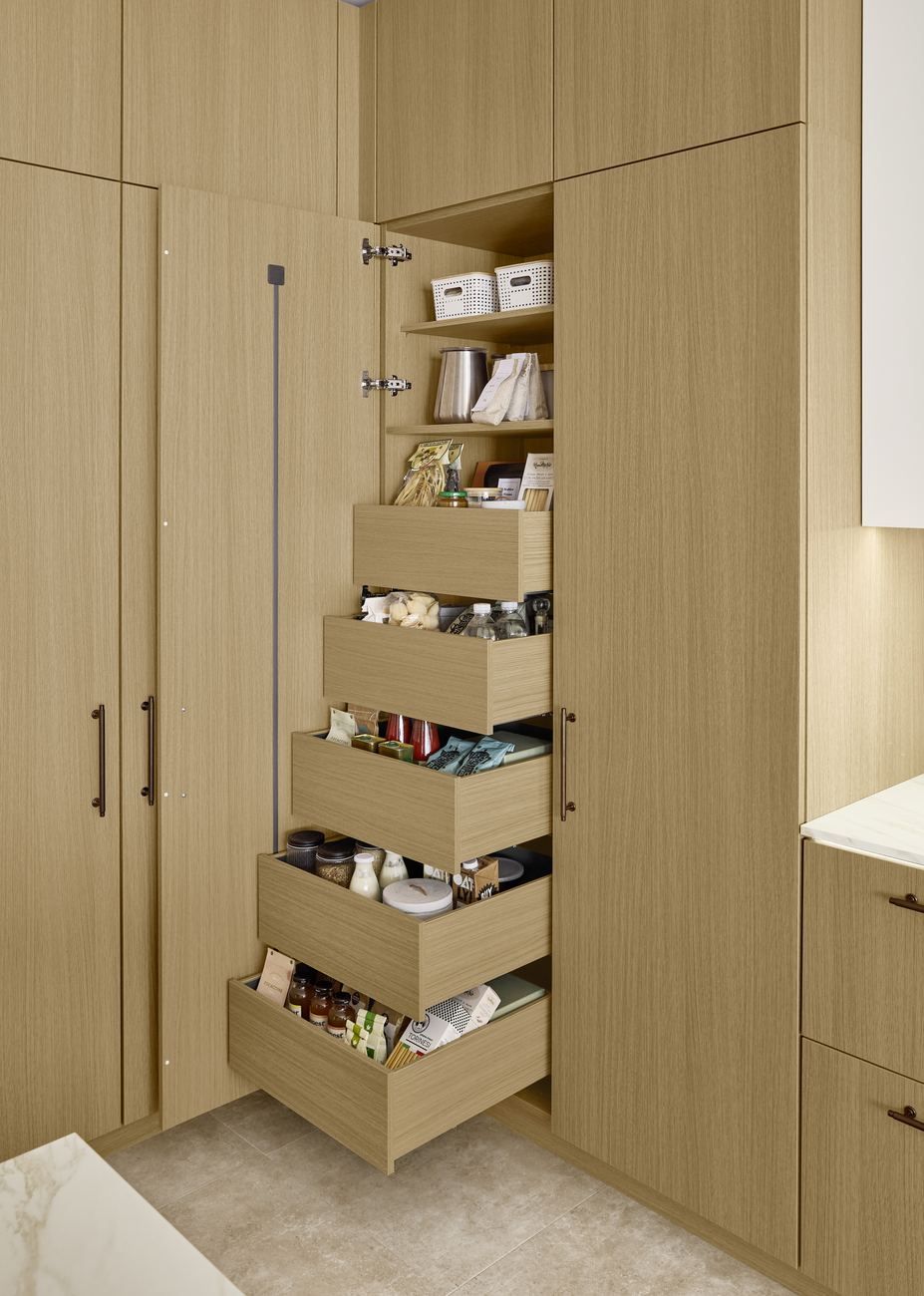
Everything above makes more sense with the picture in front of you. This is what you open forty times a day, and what decides whether the kitchen ages well or looks tired in three years.
What to look at when you compare quotes.
Any kitchen can be made cheaper by cutting in places you can't see. These are the lines where it happens.
| Item | German-made | Where the cutting happens |
|---|---|---|
| Carcass | High-density board, edged on all four sides, back seated in a groove. | Thin back stapled on from outside and edging only on the front face. |
| Drawers | Full extension with soft close and three-way adjustment, as standard. | Side-mounted ball runners, no soft close, limited adjustment. |
| Hinges | Damping built into the hinge, as standard. | Soft close charged as an extra, or fitted only on some doors. |
| Plinth and trims | In the same finish as the kitchen, with a seal against the floor. | A generic plinth and trims in a slightly different shade that start to show within two months. |
| Sizes | Units adjusted to the centimetre, with made-to-measure filler pieces. | Fixed-size units and whatever gap is left covered with a strip of trim. |
| Guarantee | The three years required by law plus ten years of commercial guarantee on the furniture, hardware included. | The three years required by law and nothing else, with the hardware left to whoever made it. |
| Spare parts | Catalogue sizes: in ten years' time you can still order the single part. | Ranges that get discontinued and force you to redo the whole run of fronts. |
One item almost nobody quotes you for. Most kitchen shops sell the furniture and leave the building work to you. We come from renovation, so the wall, the floor and the services are in the same quote and the same team answers for them.
Book an appointmentThe local half, in concrete terms.
This is the part that comes in no catalogue and that decides how your kitchen ends up. We do it ourselves, with names and faces, in the showroom where you buy.
We measure it ourselves
With a tape and a level, in your home. The walls of a 1970s flat are not parallel, and the difference between two corners can be three centimetres: that decides whether a unit fits or whether a filler piece is needed.
We draw it with you
In the showroom, on screen and in front of you. You do not leave with a brochure: you leave with your kitchen drawn to your measurements, the finish chosen with the sample in your hand and the price closed.
We do the building work
We come from renovation work. The partition, the floor, the tiling, the plumbing and the electrics go in the same quotation, are done by the same team and answered for by the same person.
Our own team fits it
Not a different fitter each time. Two or three days for a kitchen that does not change the layout, fridge in place and the silicone done.
We are the ones who answer
If a hinge gives way four years in, you call the showroom where you bought and we handle it. You do not have to write to a factory or track down whoever fitted it.
We are twenty minutes away
Eight showrooms in Catalunya. A kitchen is not bought online precisely because someone has to come back if something does not add up.
Ten years' guarantee, and what that actually means.
In Spain the law gives you three years' guarantee on any furniture you buy. Ours is ten, in writing and on top of those three. A long guarantee is only worth anything if you know what it covers, who answers for it and what voids it, so here it is.
What it covers
Manufacturing defects in the furniture and the hardware: runners, hinges, closing mechanisms and the structure of the cabinet.
Who answers for it
We do. It is handled from the showroom where you bought, without you having to write to any factory.
What it doesn't cover
Normal wear, knocks, misuse and damage from damp that has nothing to do with the furniture, such as a leak left unrepaired.
Appliances
They go separately, under each manufacturer's own guarantee. It is a different period and best not mixed up with this one.
The ten years are a voluntary commercial guarantee and are additional to the three-year legal guarantee you are entitled to without asking. The full terms are handed over in writing with the order.
What we get asked most.
How long does a German kitchen take to arrive?
About four weeks from the moment the order goes in, with a fixed date from day one. The long part isn't the factory, it is what happens before: settling the layout and taking the measurements properly.
Is it much more expensive than an ordinary kitchen?
Per linear metre it usually sits above a mid-range kitchen, and below what people imagine. There is a part you don't pay for twice: the hardware and the trims that appear as extras on other quotes.
The honest way to compare is to ask for both quotes on the same layout, line by line.
Can it be adapted to an old flat with crooked walls?
Yes, and that is exactly where it shows. The units adjust to the centimetre and filler pieces are made for the corners and the out-of-plumb walls. That is why we measure up at your place before the order goes in.
Can I keep my existing appliances?
If they fit the standard sizes, yes. We check it during the design and tell you which ones can be reused and which are worth replacing because of the space they take up.
Who fits the kitchen?
Our own fitters, not a subcontractor who changes every week. They are the same people who come to measure up, so if something doesn't fit, the person who measured it answers for it.
The quick way to find out what it would cost you.
Tell us about your kitchen in five minutes and we'll send you the 3D design with its price. No visit needed and no obligation.
Before you decide
What people ask in the showroom, answered with numbers.